
Not Just "Getting Old": How to Spot Silent Pain in Your Senior Pet
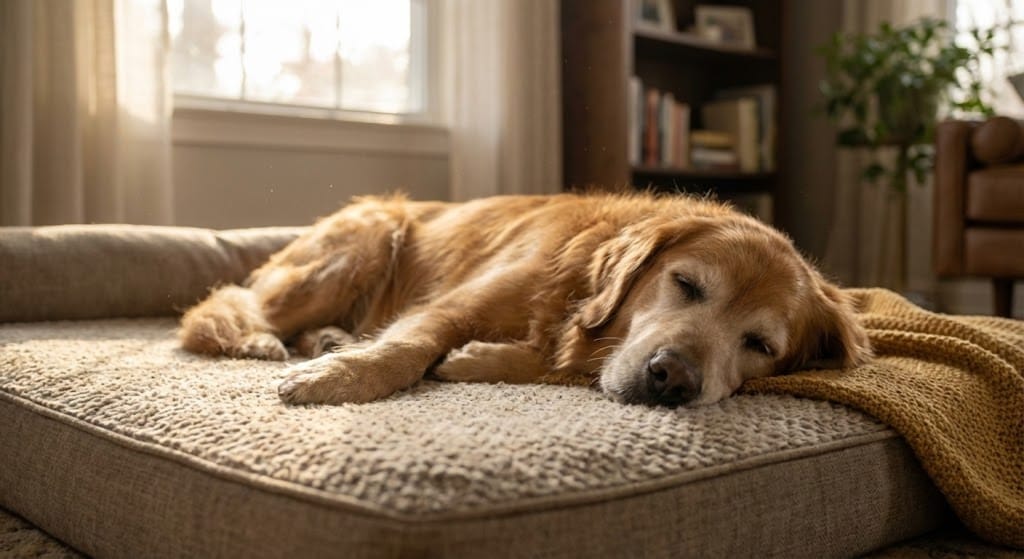
I remember the exact moment I realized things had changed.
It wasn't a gray hair—he’d had those since he was three. It wasn't a vet visit. It was the stairs. For a decade, he had flown up them like a rocket. But on this specific Tuesday, he stopped at the bottom. He looked up at me, then back at the steps, and let out a soft, almost apologetic sigh.
He eventually climbed them, but slower. Heavier.
In that moment, my heart sank. I told myself, "He’s just tired today." Or, "Well, he is getting older. Slowing down is normal."
We tell ourselves these things to protect our own hearts. Admitting our companions are aging is painful. But here is the truth that changed everything for me, and I hope it changes everything for you:
"Slowing down" is often a code word for pain. And pain is something we can treat.
The Myth of the Grumpy Old Dog
There is a pervasive myth that senior dogs and cats just naturally become lethargic or "grumpy." We assume that because they aren't yelping or limping, they aren't hurting.
But our pets are evolutionary masters at hiding weakness. In the wild, showing pain makes you a target. In your living room, they hide pain because they want to please you. They will still wag their tails. They will still try to jump into the car. They will push through the discomfort until they absolutely can't anymore.
3 Silent Signs Your Pet Isn't Just "Tired"
If you are wondering if your pet is experiencing joint pain or arthritis, stop looking for a limp. Look for the hesitation.
1. The "Prep" Step Watch your pet before they jump onto the couch or into the car. Do they crouch and stare for a second or two before leaping? Do they pull themselves up with their front paws instead of pushing off with their back legs? That hesitation is them calculating if the pain is worth the reward.
2. The Change in Sleep Senior pets sleep more, yes. But how do they sleep? If your dog used to curl into a tight donut but now sleeps sprawled out, their hips might be too stiff to curl. If your cat used to sleep on the high perch but now naps on the rug, it’s not because they prefer the rug—it’s because the perch is too hard to reach.
3. The Personality Shift Did your cuddly cat suddenly start swatting when you brush her lower back? Did your patient dog growl when a puppy bumped him? Pain makes us all have a shorter fuse. Often, a "grumpy" senior pet is just a pet whose back hurts.
The Good News
This might sound depressing, but it is actually the opposite. It is empowering.
If the "slowing down" is caused by pain, that means we can fix it. We might not be able to turn back the clock, but we can absolutely turn down the volume on the discomfort.
By recognizing these signs early, you can start making small changes today:
- Adding a supplement with Glucosamine and Chondroitin.
- Introducing a ramp so they don't have to jump.
- Swapping that flat blanket for a supportive orthopedic bed.
- Talking to your vet about pain management options (which have come a long way in recent years).
Your Mission This Week
Watch your pet closely. Ignore the gray muzzle for a moment and look at how they move. If you see that hesitation, don't despair. See it as an opportunity.
You aren't watching them fade away; you are spotting the clues they are giving you so you can help them feel like a puppy again.
(Medical Disclaimer: I am a passionate owner, not a veterinarian. This article is for educational purposes. If you suspect your pet is in pain, please consult your vet for a treatment plan.)